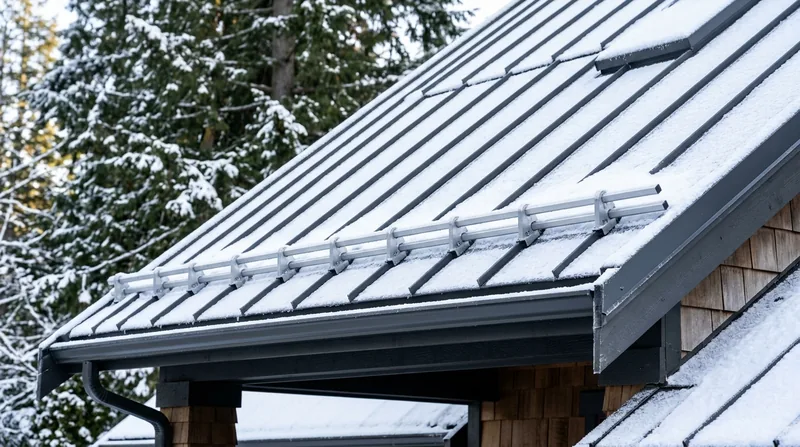




Seattle's metal roofs sit under tall Douglas firs and western red cedars on steep hills between Puget Sound and Lake Washington, and the snow that does fall here can slide off a standing seam panel in one sheet. That is why Snow Guards & Ice Protection in Seattle matters more than most homeowners expect. In Ballard, Wallingford and Ravenna, a Craftsman bungalow with a deep porch and a metal roof over the entry can shed a full snow load onto the steps below. On Queen Anne Victorians and modern infill townhomes with standing seam, the slide zone is even more predictable. We install snow guards, rail systems and ice protection built for the actual snow load and roof pitch on your house. If you are already planning roof work, start with our standing seam metal roofing page.
Why Snow Guards Matter on Seattle Metal Roofs, From Ballard to the Cascade Foothills
Most Seattle winters bring rain, moss and the occasional Pacific windstorm, not deep snow. But the city sits close enough to the Cascades that a single storm can drop wet snow on a metal roof, and a smooth standing seam panel releases it all at once. On a steep roof over an entry, a walkway or a parked car, that slide is the failure mode we see most. The same risk is real in the foothills around North Bend and Snoqualmie, where snow loads are heavier and the roof pitch is often steeper.
- Protects entries and walkways where snow slides off a steep panel above a door or porch.
- Prevents gutter damage when a sliding snow sheet tears a gutter off the fascia.
- Reduces ice damming risk at the eave where meltwater refreezes and backs up under panels.
- Protects lower roofs and skylights from snow dropping from an upper metal roof.
- Keeps snow load distributed instead of releasing it in one dangerous sheet.
We size the guard layout to your roof pitch, panel profile and the areas below the roof, not to a generic template.
Key info: A homeowner in Mount Baker had snow slide off a standing seam roof over the front steps and take out the porch light and railing. A row of pad-style snow guards above the entry solved it for less than the cost of the repairs.
For official guidance on roof work and permits in the city, check the Seattle Department of Construction and Inspections before you schedule anything.
How We Install Snow Guards and Ice Protection on Seattle Area Roofs
We start by walking the roof and mapping where snow actually releases, which means looking at pitch, panel seams, valleys and everything below the eave. Then we choose the guard type that matches the panel: adhesive or clamp-on for standing seam, screw-mounted for corrugated and ribbed panels. We set the layout so the guards hold snow in place without trapping water against the panel. Finally we check ice protection at the eave and in the valleys where meltwater refreezes.
- We inspect the roof, panel profile and pitch, and note what sits below each slide zone.
- We measure the roof area and calculate the guard spacing for the local snow load.
- We set the layout so guards sit over the panel ribs and never pierce a standing seam.
- We fasten the guards with the correct clips, adhesive or fasteners for the panel material.
- We check eave ice protection and confirm gutters can handle the meltwater.
- We walk the finished layout with you and explain what to watch for each winter.
Every install ends with a clear explanation of how the guards behave in a heavy snow year, so you know what to expect.
Key info: On a steep standing seam roof in Issaquah, we set clamp-on guards above the driveway and back entry only, which kept the cost down and protected the two places people actually walk. The rest of the roof was left to shed naturally.
If your roof also needs panel or fastener work, pair the guards with our metal roof repair service so everything is handled in one visit.
Snow Guard and Ice Protection Methods We Use in Seattle
The right method depends on your panel profile, roof pitch and how much snow you expect. A standing seam roof takes clamp-on or adhesive guards that never pierce the panel. An exposed-fastener corrugated or ribbed roof takes screw-mounted guards set into the purlins. On steep roofs over entries, a rail system spreads the load across several panels. We match the method to the roof, not the other way around.
| Approach | Description | Best for |
|---|---|---|
| Clamp-on snow guards | Non-piercing clamps that grip the standing seam rib and hold snow in place. | Standing seam roofs over entries, walkways and driveways. |
| Adhesive-mounted guards | Pads bonded to the panel with structural adhesive, no fasteners through the metal. | Flat or low-pitch panels where drilling is not an option. |
| Screw-mounted guards | Guards fastened into the purlin through the panel on exposed-fastener roofs. | Corrugated and ribbed panel roofs on homes and outbuildings. |
| Snow rail systems | Horizontal rails that hold the snow pack across a wide roof area. | Steep roofs over busy areas and heavier snow zones near the foothills. |
| Eave ice protection | Eave and valley detailing that limits ice damming and meltwater backup. | Roofs with a history of ice at the eave and clogged gutters. |
We pick one method or a mix of two, depending on the roof and what sits below it.
Snow Guards & Ice Protection Cost in Seattle: What to Expect
Most residential snow guard jobs in Seattle start around $1,200, and that figure covers a typical entry or walkway zone on a single-family roof. The price climbs with roof height and pitch, the number of slide zones you want protected, and whether the panels are standing seam or exposed fastener. Access matters too: a steep roof on a Queen Anne hill or a waterfront home in West Seattle takes more setup than a low rambler in Lake City. On larger homes and foothill properties near North Bend, a full rail system can run well above the starting figure.
Get two or three estimates and compare the guard type, the number of guards and the warranty, not just the bottom line. A cheap quote that skips the ice protection at the eave usually costs more later. Our full pricing overview lays out how we build a number for each roof.
What to Look for When Hiring a Metal Roofing Contractor Near Me in Seattle
Snow guards are small parts with real consequences, so hire the same way you would for a full roof. Confirm the contractor is licensed and insured in Washington and ask for a certificate of insurance before work starts. Get at least two or three written estimates that list the guard type, quantity and ice protection details. Ask for local references on metal roofs, and check that the company knows how the local building department handles roof permits. If you are in a historic district or an HOA, confirm the guard style and color are allowed before you order anything.
We have worked on Seattle metal roofs since 2009 and are a Metal Roofing Alliance Member. To set up a walk-through, reach us through our contact and free estimate page or call (425) 648-6332.
Snow Guards & Ice Protection in Seattle: Pricing Guide
| Service | Price | Details |
|---|---|---|
| Snow guards for one entry or walkway zone | Starting at $1,200 | Covers layout, guards and fasteners for a typical single slide zone on a residential roof. |
| Multiple slide zones on one roof | Starting at $1,800 | Adds guards above a second entry, driveway or lower roof, priced by zone and guard count. |
| Snow rail system on a steep roof | Starting at $2,900 | Rail runs spread the snow load across panels; pitch and roof height drive the final number. |
| Eave ice protection add-on | Starting at $450 | Adds eave and valley detailing to limit ice damming where meltwater refreezes. |
| Complex or large-scale job | On estimate | Foothill properties and full-roof layouts need an on-site look before we quote. |
| Estimate | Free | Response within 24 hours at (425) 648-6332, with no obligation to book. |
Indicative pricing, the exact cost depends on square footage, finish, and site access. Free personalized estimate within 24h at (425) 648-6332.


